
On May 16, 2023, the Council of the European Union approved a Regulation that prohibits the sale, import and export of certain products derived from deforestation and/or environmental degradation areas in the countries of the block.
The new legislation aims to combat global warming and preserve animal and plant biodiversity, as well as the human rights of communities originating in these regions.
- How will it work?
Only products originating from lands that have not been deforested after December 31, 2020, will be able to enter the European Union countries freely, and these will be called “deforestation-free products.
Products originating from deforested areas will have their commercialization banned in the block, including those that are manufactured from these products.
The European Commission will determine the risk level of countries, which will be classified as “high risk”, “medium risk” or “low risk” on the basis of the degree of deforestation and forest degradation, the expansion of land use in major commodities, and observed trends, based on available data, warnings from NGOs and other internationally recognized sources.
- Which products are prohibited from entering the European Union?
Initially, the following products were identified as originating from deforestation areas will be banned from entering the European Union:
- Palm oil;
- Wood;
- Coffee;
- Cocoa;
- Beef;
- Rubber; and
- Soybeans.
Products made from the above commodities (e.g. furniture, cosmetics and chocolates) will also not be allowed to be exported to the European Union.
- When will the ban begin?
The Regulation will enter into force 20 days after its publication, which has not yet occurred. The import ban will begin 18 months after the Regulation enters into force for businesses in general and 24 months after the Regulation enters into force for small and medium-sized businesses
- What are the implications for Brazil’s exports?
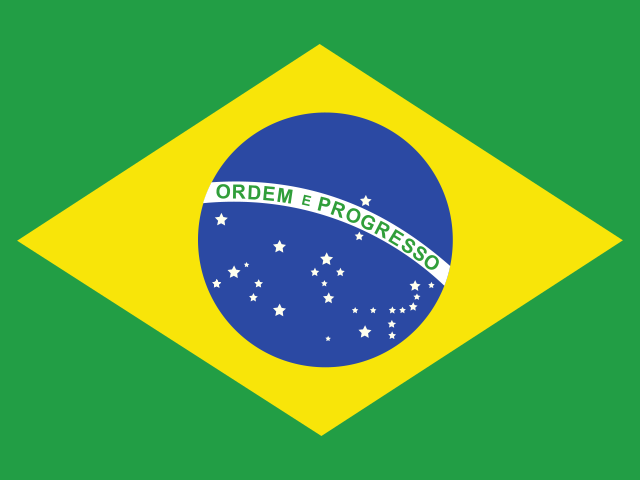
The new European legislation on deforestation will affect several Brazilian exporters, who will not be able to export their goods to the bloc countries, since: (i) the Amazon and the Midwest may be considered deforested regions for the purposes of the European regulation; and (ii) the list of exports to the European Union includes prohibited commodities, such as soy and beef, as well as products made with these commodities, such as processed meat.
- What can Brazilian producers and exporters do?
Brazilian companies that manufacture and/or export products to the European Union must start adopting measures to contribute to public policies to avoid deforestation and forest degradation as a way to reduce the country’s risk under the terms of European regulators, in addition to mapping and registering all inputs and all stages of their production chain.
Companies that use in their production chain the commodities whose entry will be prohibited must demonstrate that they are not manufactured in deforested or environmentally degraded areas.